
The Number One Question We Hear From Homeowners
If you're thinking about remodeling your kitchen, one of the first questions on your mind is probably: how long is this going to take? It's a fair question. The kitchen is the heart of the home, and being without a fully functioning one for weeks — or months — can feel daunting.
The honest answer is that every kitchen remodel is different. But after years of completing kitchen renovations across San Diego, we've learned that giving homeowners a realistic timeline upfront makes the entire experience smoother. So let's break it down phase by phase, from initial planning to that satisfying moment when you cook your first meal in your brand-new kitchen.
Phase 1: Design and Planning (2–6 Weeks)
Before a single cabinet is removed, there's a significant amount of planning that needs to happen. This phase includes:
- Initial consultation and measurements — Your contractor visits the space, discusses your goals, and takes detailed measurements.
- Design development — Whether you're working with a designer or your contractor's in-house team, this is when layouts are finalized, materials are selected, and the scope of work is nailed down.
- Permits — In San Diego, most kitchen remodels that involve electrical, plumbing, or structural changes require permits from the city's Development Services Department. Permit timelines can vary, but plan for one to three weeks depending on the complexity of your project.
- Material ordering — Cabinets, countertops, appliances, and specialty tile often have lead times. Custom cabinetry, for example, can take four to eight weeks to arrive.
This planning phase is where many homeowners get impatient, but rushing it almost always leads to problems down the road. A well-planned kitchen remodel stays on schedule. A poorly planned one doesn't.
Phase 2: Demolition (2–5 Days)
Once permits are in hand and materials are ordered, the real action begins. Demolition is fast and dramatic — old cabinets come out, flooring gets pulled up, and the space is stripped down to its bones. For most standard-sized kitchens, this takes just a few days.
During demolition, your contractor may also uncover surprises behind the walls: outdated wiring, water damage, or plumbing that doesn't meet current code. A good contractor will communicate these findings immediately and walk you through your options before moving forward.
Phase 3: Rough-In Work (1–2 Weeks)
This is the behind-the-scenes phase that most people don't think about, but it's critical. Rough-in work includes:
- Electrical — Adding circuits, relocating outlets, installing recessed lighting
- Plumbing — Moving supply lines and drains if your layout is changing
- HVAC adjustments — Rerouting ductwork if needed
- Framing — Any structural changes like removing a wall or adding a pass-through
These trades need to be scheduled in the right order, and inspections must pass before the project can move to the next step. Experienced contractors in San Diego coordinate this carefully so there's minimal downtime between trades.
Phase 4: Drywall, Painting, and Prep Work (1–2 Weeks)
Once rough-in inspections pass, the walls get closed up with new drywall, taped, mudded, and sanded. Then comes priming and painting. If you're installing new flooring, this is often when that work begins as well — though the exact timing depends on the type of flooring and how it interacts with cabinet installation.
This phase can feel slow because you're watching paint dry — literally. But it's setting the stage for the exciting finish work ahead.
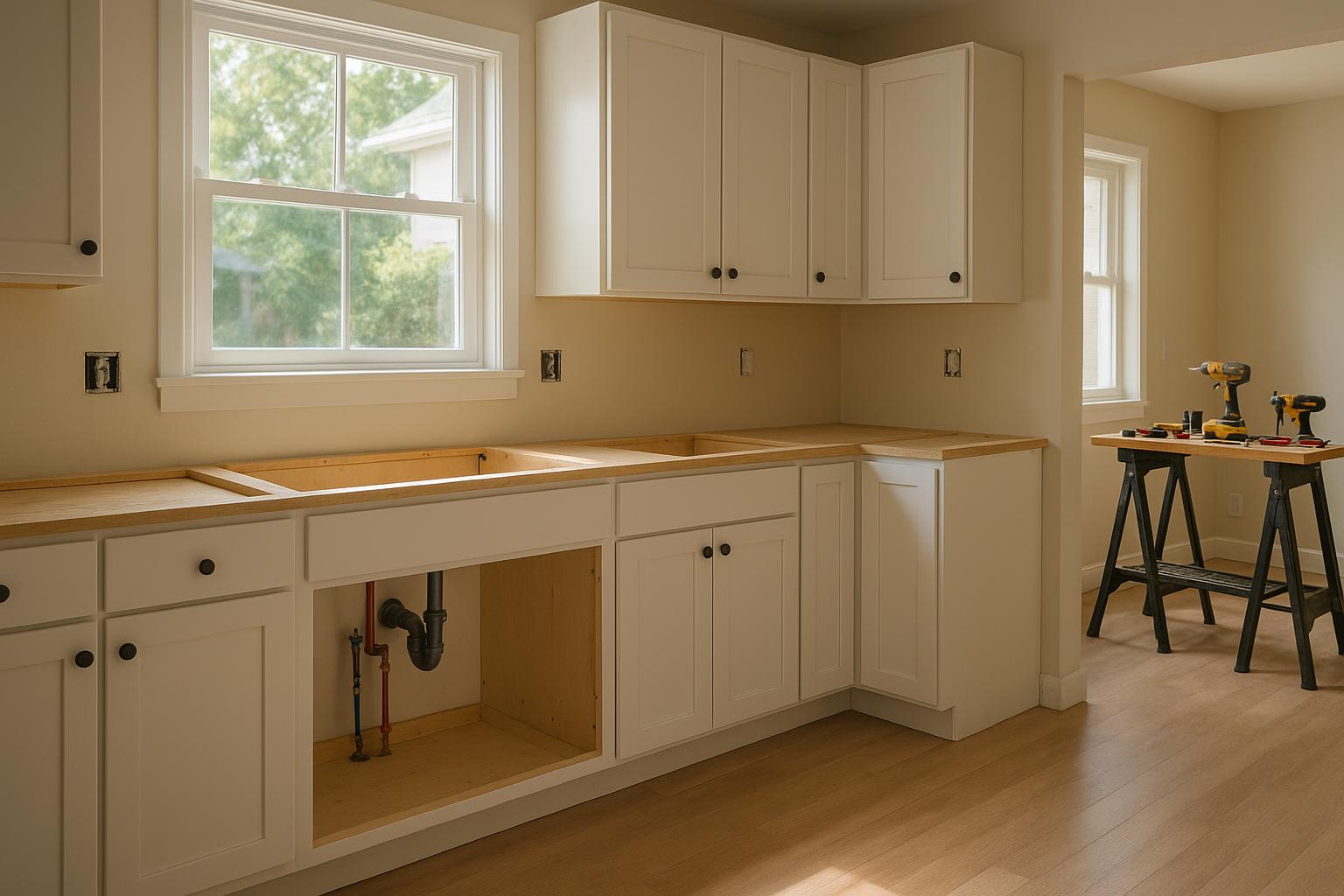
Phase 5: Cabinets and Countertops (1–2 Weeks)
Cabinet installation is one of the most transformative moments in a kitchen remodel. In just a few days, the room starts to look like an actual kitchen again. After cabinets are set and leveled, countertop fabricators come out to do a final template. For stone countertops like quartz or granite, there's usually a one- to two-week turnaround between templating and installation.
This is another reason the planning phase matters so much. If your cabinets or countertop materials aren't ready when the project reaches this stage, everything stalls.
Phase 6: Finish Work and Installation (1–2 Weeks)
Now comes the fun part. This is when your kitchen really comes together:
- Countertop installation
- Backsplash tile
- Sink and faucet hookup
- Appliance installation
- Cabinet hardware
- Light fixtures and switches
- Final trim and touch-up painting
Each of these tasks may seem small on its own, but together they add up. A detail-oriented contractor will take the time to get every element right rather than rushing to finish.
Phase 7: Final Inspection and Walkthrough (1–3 Days)
The city of San Diego will need to do a final inspection to sign off on any permitted work. Your contractor should also do a thorough walkthrough with you to review every detail, test every appliance, and create a punch list for any minor adjustments.
So What's the Total Timeline?
For a typical mid-range kitchen remodel in San Diego — one that involves new cabinets, countertops, flooring, lighting, and updated plumbing and electrical — homeowners should plan for eight to twelve weeks from the start of construction. Add the planning and design phase, and you're looking at roughly three to five months from your first meeting to your finished kitchen.
Larger or more complex projects, such as those involving structural changes, room expansions, or high-end custom materials, can take longer. Smaller cosmetic refreshes — like refacing cabinets and updating fixtures — can sometimes be completed in as little as three to four weeks.
What Can Delay a Kitchen Remodel?
Even the best-planned projects can hit bumps. Here are the most common causes of delays:
- Material backorders — Supply chain issues still affect certain products. Ordering early helps.
- Permit delays — Some jurisdictions move faster than others. Your contractor should factor this into the schedule.
- Scope changes mid-project — Deciding to add a pantry or change your countertop material after work has started will push the timeline out.
- Hidden damage — Older homes in neighborhoods like La Mesa, El Cajon, and Chula Vista sometimes have surprises behind the walls that need to be addressed before moving forward.
How to Keep Your Remodel on Track
The single best thing you can do as a homeowner is choose a contractor who communicates clearly and plans thoroughly. Beyond that:
- Make material selections early and commit to them
- Respond quickly when your contractor needs a decision
- Build a buffer of one to two weeks into your mental timeline
- Trust the process — some phases look slow but are essential
At Golden Spike Contractors, we walk every San Diego homeowner through a detailed project schedule before work begins. We believe that when you know what to expect, the remodeling experience goes from stressful to genuinely exciting.
If you're considering a kitchen remodel and want a clear, honest timeline for your specific project, reach out to us for a free consultation. We'll assess your space, discuss your goals, and give you a realistic plan you can count on.