
The Question Every Homeowner Asks First
You've been dreaming about a new kitchen for months—maybe years. You've scrolled through Pinterest boards, visited showrooms, and finally decided it's time. But before you commit, there's one question that stops almost everyone in their tracks: how long is this actually going to take?
It's a fair question. Your kitchen is the most-used room in your home, and being without it for weeks (or longer) is a big deal. The problem is that most answers you'll find online are vague. "Six to twelve weeks" doesn't exactly help you plan your life.
At Golden Spike Contractors, we walk our San Diego clients through a detailed timeline before we ever swing a hammer. Here's the honest breakdown of what a kitchen remodel looks like from start to finish—and what can speed things up or slow things down.
Phase 1: Design and Planning (2–6 Weeks)
This is the phase most people underestimate. Before any construction begins, you need a solid plan that covers layout, materials, appliances, cabinetry, lighting, and finishes. Rushing through this stage is the single biggest cause of delays later on.
During design and planning, you'll typically:
- Meet with your contractor to discuss your vision, budget, and must-haves
- Finalize the floor plan and layout changes
- Select cabinets, countertops, tile, fixtures, and appliances
- Obtain any necessary permits from the City of San Diego
Permit timelines in San Diego can vary depending on the scope of work. A straightforward cosmetic remodel may not need one, but if you're moving plumbing, electrical, or walls, expect the permitting process to add one to three weeks. Your contractor should handle this for you—if they don't mention permits at all, consider that a red flag.
Pro Tip
Order your cabinets and appliances as early as possible. Custom and semi-custom cabinets can take four to eight weeks to arrive, and appliance availability still fluctuates. Getting these orders placed during the planning phase keeps your project on track.
Phase 2: Demolition (2–5 Days)
This is the exciting (and loud) part. Once your materials are ordered and permits are in hand, the demo crew comes in to strip the kitchen down to the studs—or at least remove everything that's being replaced.
Demolition for a full kitchen remodel usually takes just a few days. During this phase, your contractor will also uncover any hidden surprises behind the walls, like outdated wiring, water damage, or plumbing that doesn't meet current code. In older San Diego neighborhoods like North Park, Kensington, and La Mesa, these discoveries are more common than you might think.
A good contractor builds a small contingency buffer into the timeline for exactly these situations. If everything looks clean behind the walls, great—you're ahead of schedule. If not, you won't be blindsided.
Phase 3: Rough-In Work (1–2 Weeks)
This is the behind-the-scenes phase where licensed plumbers, electricians, and HVAC technicians do their work before the walls get closed up. If you're changing your kitchen layout—moving the sink to an island, adding under-cabinet lighting, or relocating a gas line for your range—this is when it happens.
Rough-in work also includes any structural changes, like removing a wall to open up the kitchen to the living area. This phase requires inspections from the city before you can move forward, so your contractor needs to coordinate scheduling carefully.
Phase 4: Drywall, Painting, and Flooring (1–2 Weeks)
Once inspections pass, the space starts to look like a room again. Drywall goes up, gets taped, mudded, and sanded. Then comes primer and paint. Flooring is typically installed during this phase as well, though the exact order depends on the type of flooring you've chosen.
For example, hardwood and luxury vinyl plank are often installed before cabinets, while tile might be laid after cabinets are set, depending on the design. Your contractor will sequence this based on your specific project.
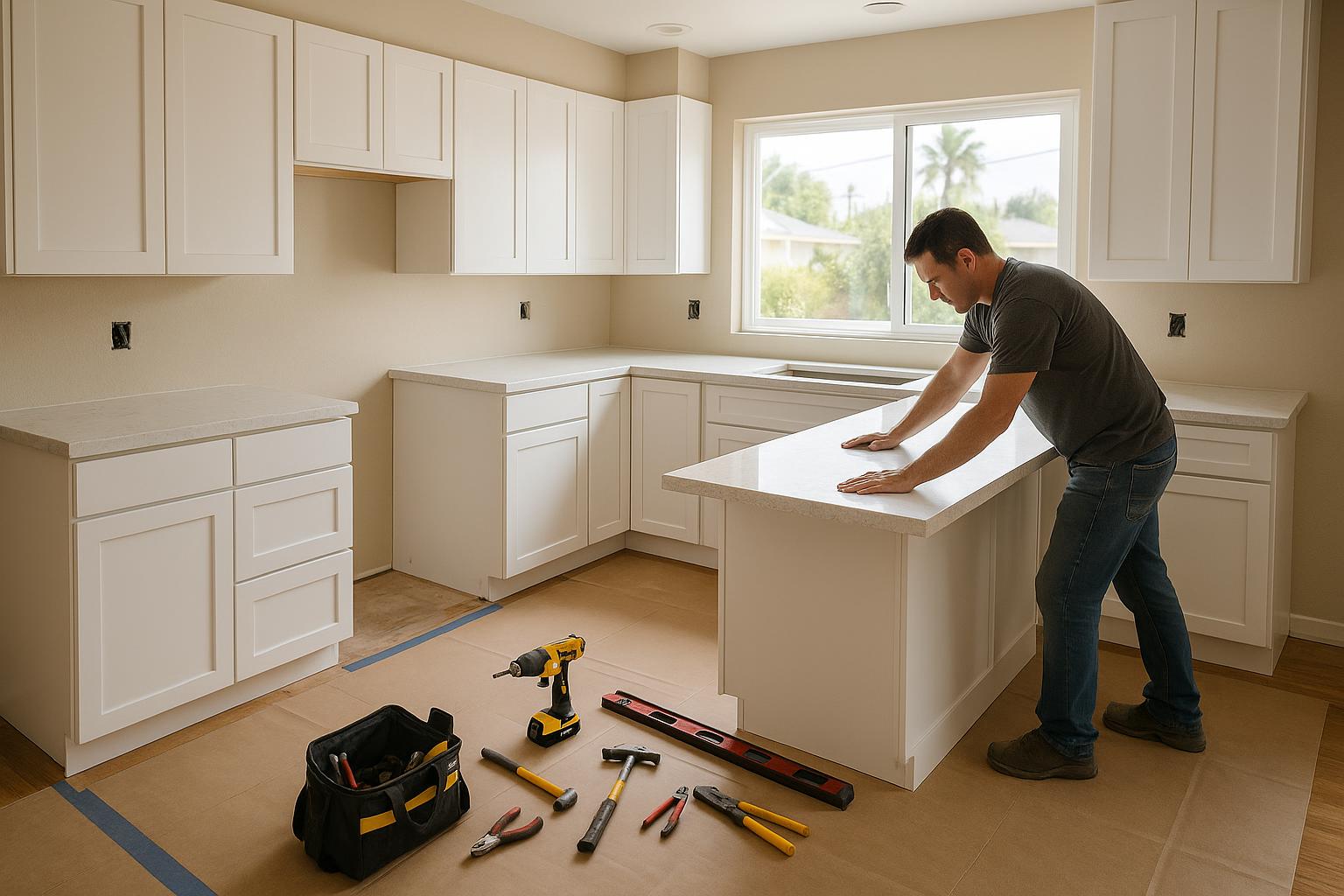
Phase 5: Cabinets and Countertops (1–2 Weeks)
This is when the transformation really starts to feel real. Cabinet installation usually takes a few days for a standard-sized kitchen. Once the cabinets are set and leveled, your countertop fabricator will come out to do a final template measurement.
After templating, stone or quartz countertops typically take seven to ten days to fabricate and install. This is another area where the timeline depends on material availability and fabricator schedules—something your contractor should be managing proactively.
Phase 6: Finishing Touches (1–2 Weeks)
The final phase brings everything together:
- Backsplash tile installation
- Plumbing fixture hookups (sink, faucet, dishwasher, garbage disposal)
- Electrical fixture installation (pendant lights, under-cabinet LEDs, outlets)
- Appliance delivery and installation
- Hardware on cabinets and drawers
- Final paint touch-ups and caulking
- Thorough cleaning
Your contractor should do a detailed walkthrough with you at the end, creating a punch list of any minor items that need attention before the project is officially complete.
So What's the Total?
For a full kitchen remodel in San Diego, most homeowners should expect 8 to 14 weeks from demolition to completion, with an additional 2 to 6 weeks of planning and design before construction starts. A smaller cosmetic update—new cabinets, countertops, and paint without layout changes—can sometimes be finished in 4 to 6 weeks.
Here's a quick summary:
- Design and planning: 2–6 weeks
- Demolition: 2–5 days
- Rough-in work: 1–2 weeks
- Drywall, paint, flooring: 1–2 weeks
- Cabinets and countertops: 1–2 weeks
- Finishing touches: 1–2 weeks
What Causes Delays (and How to Avoid Them)
Most kitchen remodel delays come down to a few common culprits:
- Late material selections. If you haven't chosen your tile or fixtures by the time they're needed, the whole schedule shifts. Make decisions during the planning phase, not during construction.
- Backordered materials. Supply chain issues have improved, but some items still have long lead times. Order early.
- Change orders mid-project. Deciding to move the refrigerator to the other wall during week three adds time and cost. Get the design locked in before demo day.
- Permit and inspection delays. An experienced local contractor knows how to navigate San Diego's permitting process efficiently and schedule inspections without losing momentum.
The Bottom Line
A kitchen remodel is a significant investment of both money and time, but it shouldn't feel like a mystery. When you work with a contractor who communicates clearly, plans thoroughly, and manages the schedule proactively, the process is predictable—and even enjoyable.
If you're considering a kitchen remodel in San Diego, Chula Vista, La Mesa, or the surrounding area, Golden Spike Contractors would love to walk you through what your specific project timeline would look like. Every kitchen is different, and you deserve a straight answer before you commit.